

Dark Comets »

Another Expert Agrees With Dark Comet Theory

February 21, 2013 – 11:31 am | No Comment

Astronomer David Asher (from Armagh University) has agreed with Bill Napier and Janaki Wickramasinghe (Cardiff University) that “dark comets” are real and dangerous.
The following quotes are from a paper by Napier and Asher published in Astronomy & Geophysics.
http://star.arm.ac.uk/preprints/2009/539.pdf

We know that about one bright comet (of absolute magnitude as bright as 7, comparable to Halley’s Comet) arrives in the visibility zone (perihelion q<5AU, say) each year from the Oort cloud. It seems to be securely established that ~1–2% of these are captured into Halleytype (HT) orbits. The dynamical lifetime of a body in such an orbit can be estimated, from which the expected number of HT comets is perhaps ~3000. The actual number of active HT comets is ~25. This discrepancy of at least two powers of 10 in the expected impact rate from comets as deduced from this theoretical argument on the one hand, and observations on the other, is …

Read the full story »
Bunkers

From DIY to Russian megabunkers

Survivalism

Preparing for when the SHTF

Pole Shift

Crustal displacements and magnetic pole shift – both are scary

Comets

Don’t believe NASA – these are a genuine threat

Earthquakes

More likely during eclipses and perhaps Comet Elenin is a factor?

Home » Evolution

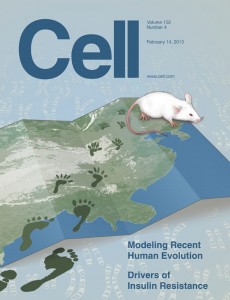
Recent Human Evolution Determined
Submitted by on February 15, 2013 – 4:00 pmNo Comment

It’s quite easy to spot Asian folks from behind. I always thought they just had shinier black hair than other races, but actually they have thicker hair. As do Native Americans, who originated from Asia. And we also know that some Asian people are more prone to sweating. Well, these are both the result of a single mutant gene that arose not too long ago:

Researchers were able to find a single mutation that produces several traits common in East Asian peoples, from thicker hair to denser sweat glands.

…most East Asian populations had a variant of it called EDAR370A, which studies linked to thicker scalp hair and altered tooth shape in humans.

In order to more fully examine this mutation, Yana Kamberov, one of the researchers, developed a mouse model with the exact mutation of EDAR370A. The researchers found that the mouse exhibited thicker hair, more densely branched mammary glands and an increased number of sweat glands. This prompted the scientists to examine similar traits in human populations. After examining the fingertips of Chinese volunteers who carried the gene, they found that their sweat glands were packed about 15 percent more densely than those of the control population.

Source: Science World Report

Computer models suggest that the variant arose between 13,175 and 39,575 years ago, which fits in well with the notion that Native Americans left Asia approximately 15,000 years ago, when the Ice Age was ending and the Bering Strait become ice-free. The question that still needs to be answered is how these traits are beneficial. I guess thicker hair could have helped during the ice age, but sweat glands?

Leave a comment!

Add your comment below, or trackback from your own site. You can also subscribe to these comments via RSS.

Be nice. Keep it clean. Stay on topic. No spam.

You can use these tags:
<a href="" title=""> <abbr title=""> <acronym title=""> <b> <blockquote cite=""> <cite> <code> <del datetime=""> <em> <i> <q cite=""> <s> <strike> <strong>

This is a Gravatar-enabled weblog. To get your own globally-recognized-avatar, please register at Gravatar.