


The Electric Universe @ Thunderbolts.info
http://www.thunderbolts.info/wp/2012/04/25/dawn-of-the-north-wind-2/
An “electric universe” makes for an interesting alternative to standard theories. It has a lot of followers and few debunkers, and I really want to study it one day, although it is currently in my too hard basket. Not too hard for me to understand, but more too hard for me to find someone who explains it well enough for me to understand. If Michio Kaku were to write a book on it (unlikely) I’d be happy.
But, basically, electricity and plasma are major forces in the universe… in the same way orthodox scientists regard gravity.
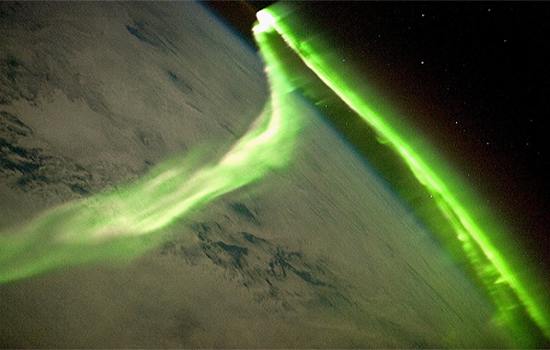
For anyone that is interested, there is an excellent community at Thunderbolts.info, with a busy forum, videos and books. Here are some recent topics they have discussed in the forum, and above is one of their Pictures of the Day.
Some 460 light-years away in the constellation Centaurus, a thick disk of dust swirled around a young star named TYC 8241 2652 1, where rocky planets like our own were arising. Then, in less than 2 years, the disk just vanished. That’s the unprecedented observation astronomers report in a new study, out today. Even more intriguing: The same thing may have happened in our own solar system.
http://www.thunderbolts.info/forum/phpBB3/viewtopic.php?f=3&t=6330
“However, our results suggest that convective motions in the Sun are nearly 100 times smaller than these current theoretical expectations,” continued Hanasoge, also a postdoctoral fellow at the Max Plank Institute in Katlenburg-Lindau, Germany. “If these motions are indeed that slow in the Sun, then the most widely accepted theory concerning the generation of solar magnetic field is broken, leaving us with no compelling theory to explain its generation of magnetic fields and the need to overhaul our understanding of the physics of the Sun’s interior.”
http://www.thunderbolts.info/forum/phpBB3/viewtopic.php?f=3&t=6355
Scientists have for the first time directly observed dark matter, which forms the greatest part of a galactic filament, the largest-known structure in the universe. On the largest scale the universe looks like an intricate web. Clusters of galaxies, which form its strands, are connected by much slimmer bridges, or filaments, with huge voids in between.
http://www.thunderbolts.info/forum/phpBB3/viewtopic.php?f=3&t=6335


