

British Tsunamis
I’ve only really investigated the tsunamis of places I recommend to be for maximum safety. For everywhere else, I suggest being at least one hour’s drive inland and 500m above sea level. That is for protection from tsunamis generated by the sea impact of an asteroid or comet.
Of course tsunamis happen all the time, usually due to earthquakes and landslides. A reader pointed out to me that Great Britain has had tsunamis in the past, and people there are not immune. I wonder how many Brits know that they are on an island due to a tsunami?
What had been a cold, dry tundra on the north-western edge of Europe grew warmer and wetter as the ice caps melted. The Irish Sea, North Sea and the Channel were all dry land, albeit land slowly being submerged as sea levels rose.But it wasn’t until 6,100BC that Britain broke free of mainland Europe for good, during the Mesolithic period – the Middle Stone Age. It is thought that landslides in Norway – the Storegga Slides – triggered one of the biggest tsunamis ever recorded on Earth when a landlocked sea in the Norwegian trench burst its banks.
The water struck the north-east of Britain with such force it travelled 25 miles (40km) inland, turning low-lying plains into what is now the North Sea, and marshlands to the south into the Channel. Britain became an island nation.
Other, more recent British Tsunamis include:
- 1014, England and Wales – William of Malmesbury stated that “A tidal wave… grew to an astonishing size such as the memory of man cannot parallel, so as to submerge villages many miles inland and overwhelm and drown their inhabitants.”
- 1755, Lisbon Earthquake – three meter tsunami reached Cornwall, two meter tsunami reached Galway
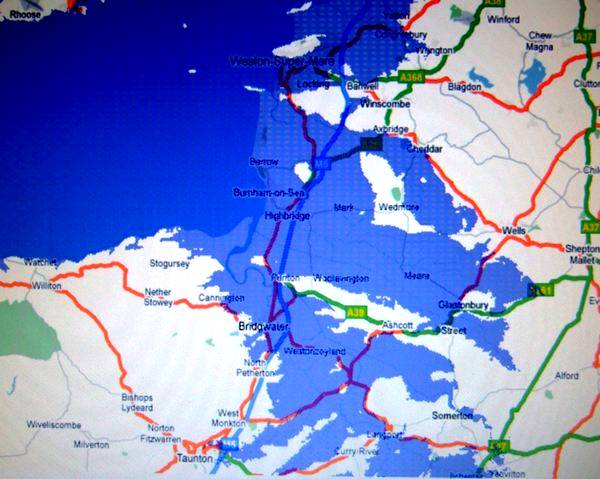
- 1607, Bristol Channel Floods – most likely caused by a tsunami, 3000 people drowned. Cardiff, and the Welsh side of the channel were most affected, but flooding also reached Glastonbury and further inland