


Asteroid Impacts Now Include Ozone Threat
The rules of thumb for asteroid impacts are that an ocean strike will cause tsunamis (no long-term problems beyond the initial wide-spread destruction), and that an asteroid striking the Earth will cause diminished sunlight for a few years, and local damage only.
New research suggests that an ocean strike could also create a hole in the ozone layer, or even reduce the entire ozone layer for two years. While the article does not mention precisely how this will affect crops, for humans the result is clear – we would be forced to stay indoors.
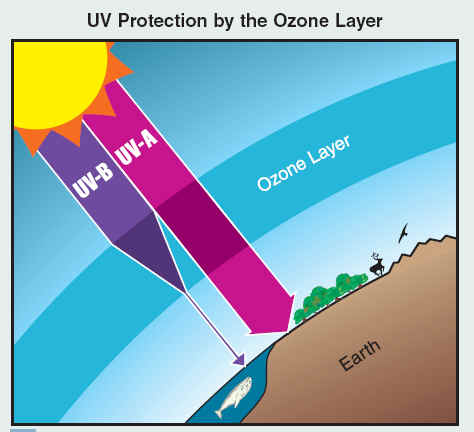
Model results showed a 0.3-mile asteroid that hit at a latitude 30 degrees north in the Pacific Ocean in January would lead to a local impact on the ozone layer – though “local” still meant an ozone hole that spread across the entire Northern Hemisphere. By contrast, the 0.6-mile asteroid strike led to a worldwide drop in UV protection – at which point the “hole” ceases to be a hole.
…A strike by the larger of the two model asteroids boosted UVI values above 20 within a 50-degree latitude band north and south of the equator for about two years. Some areas within the band saw UVI spikes as high as 56. That band’s northern end would include cities such as Seattle and Paris, while the southern end would extend into cities within countries such as New Zealand, Chile and Argentina.
Long-term effects of such high UV radiation would include skin-reddening, changes in plant growth and genetic mutations for humans and other organisms.
This is perhaps something that should be incorporated into studies on prior global extinctions.


