


Second Solar Storm Detector Launching in 2014
Better late than never!
In my recent article on the incredible harm a solar storm could inflict on infrastructure, I pointed out that we only have a single line of defense, and the solar storms it detects could kill it:
When warning us about incoming geomagnetic storms, the NOAA’s only source of data is the Advanced Composition Explorer (ACE) satellite. It was launched in 1997, and according the the U.S. National Academy of Sciences in 2009, it is “well beyond its planned operational life”. I take this to mean it could fail any time, and there is no backup satellite! And all current safety measures become redundant – we won’t be able to remove vulnerable equipment from the grid before it is too late. “ACE is a single point of failure and it’s old,” said William Murtagh, program coordinator for NOAA’s Space Weather Prediction Center. “Every time I have a space weather storm I cringe a little bit that our very own space weather satellite doesn’t succumb to the storms I’m relying on it to help forecast.”
Here’s some good news from NASA – a second satellite is due for launch in 2014, and it will sit at twice the distance of the ACE, which means we will get double the warning of a solar storm.
Essentially a large square of extremely thin metal (it’s one eighth the width of a human hair), the sail can be attached to a satellite to cheaply and constantly produce thrust. With a planned launch in 2014, the sail might be able to fly a satellite close to the sun to study solar flares—and alert scientists when one is incoming.
http://www.usnews.com/news/articles/2012/03/30/space-sailboat-could-offer-solar-storm-early-warning-system
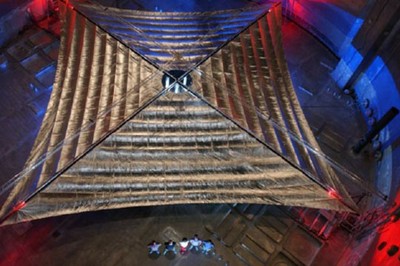
Given that it will only cost NASA $20 million, and the ACE needs replacing, and a solar storm could cost trillions in damages (plus millions of deaths), I’d like to expect that thus project will proceed.


