


Astrophysicists: Crab Pulsar is Ultra-Powerful
It amazes me how contradictory orthodox scientists can collectively be. When discussing the future of our planet, they typically regard their current understandings to be certainties that are set in stone. A good example is that we are not close enough to any potential supernova for harm to come to us. But that’s not fact, that’s an opinion based on a very short period of observations. So while I hear cosmic doomsday scenarios being dismissed all the time, I also come across many instances where scientists admit they have a lot to learn.
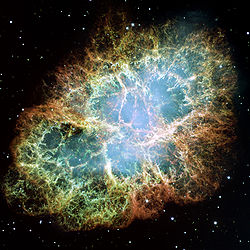
The pulsar at the centre of the famous Crab Nebula is a veritable bundle of energy. This was now confirmed by the two MAGIC Telescopes on the Canary island of La Palma. They observed the pulsar in the very high energy gamma radiation from 25 up to 400 gigaelectronvolts (GeV), a region that was previously difficult to access with high energy instruments, and discovered that it actually emits pulses with the maximum measurable energy of up to 400 GeV – at least 50 to 100 times higher than theorists thought possible. These latest observations are difficult for astrophysicists to explain. “There must be processes behind this that are as yet unknown”, says Razmik Mirzoyan, project head at the Max Planck Institute for Physics.
So if they can be wrong about pulsars by a factor of 100, then surely they could also be wrong about the intensity or frequency of cosmic rays, solar storms, supernovas, comets and all the rest? If they could admit to uncertainties, then perhaps more people could prepare for the worst, rather than trusting the untrustworthy assurances of the experts.


