


Tunguska was a Meteorite
For a long time Tunguska has been a mystery – was in a comet or a meteorite or something else (Tesla anyone?).
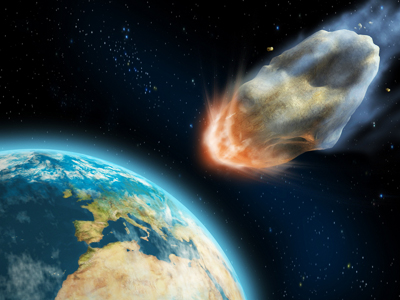
To my knowledge, this is the first time the mystery has been solved using facts rather than speculation:
An icy comet would evaporate on impact, which could explain the lack of any observable evidence. But a study in the journal Planetary and Space Science provides, for the first time, evidence that the impact was not caused by a comet. Researchers collected microscopic fragments recovered from a layer of partially decayed vegetation (peat) that dates from that extraordinary summer.
Victor Kvasnytsya from the National Academy of Sciences of Ukraine and his colleagues used the latest imaging and spectroscopy techniques to identify aggregates of carbon minerals—diamond, lonsdaleite, and graphite. Lonsdaleite in particular is known to form when carbon-rich material is suddenly exposed to a shock wave created by an explosion, such as that of meteorite hitting Earth. The lonsdaleite fragments contain even smaller inclusions of iron sulphides and iron-nickel alloys, troilite and taenite, which are characteristic minerals found in space-based objects such as meteorites. The precise combination of minerals in these fragments point to a meteorite source. It is near-identical to similar minerals found in an Arizona impact.
[Source: The Hindu]
So there you go. Both are risks to humanity, so the important thing is knowing that we can get hit by objects from space…


