


Airborne Ebola Possible Says Researchers
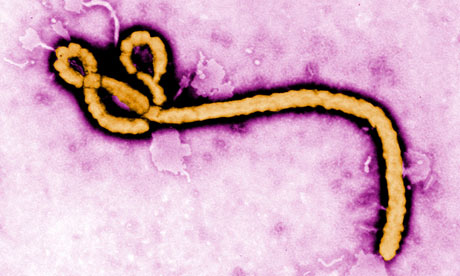
Ebola is one of the most feared diseases in the history of humankind. Once infected your odds of not dying painfully are only 1-in-3. In Africa there have been numerous outbreaks, the worst of which infected 425 Ugandans, with more than half of them dying.
There are two key reasons why outbreaks have not been much worse:
- Victims die within three days, limiting their ability to infect others
- Viral transmission requires people to be close and/or touching
Researchers are concerned that an Ebola strain could develop that is airborne. To find out how easily transmitted it currently is, Canadian scientists conducted an experiment:
Researchers at the University of Manitoba in Winnipeg deliberately infected six piglets with the ebola virus and put them in pens where macaque monkeys were housed in wire cages.
Within eight days all four monkeys caught the virus through indirect contact, according to the study published in the journal Scientific Reports.
- Ebola becomes more airborne, infecting a greater number of people at once
- Ebola kills less quickly, enabling the host to infect more people because they live longer
The most likely epicenters of a global Ebola pandemic would be Central Africa or a research lab.
Direct flights out of Uganda are either to other African nations or Europe. That should mean that the USA and Australia would have a better chance of keeping infected people out. Given that it could all be over in a matter of a month or two, the best way to prepare is the same as almost every other disaster – store food and water, and isolate yourself.


