


Official Bunkers: BBC / Ottawa
England
I guess I’m just reminding y’all that the Powers That Be understand that it is best to be prepared, even if you don’t know what will happen, or when. I’m not suggesting that you build a mutli-level bunker like the Walton family, but please take a hint from your leaders and at least store some food and water.
Those involved in its construction were obliged to sign the Official Secrets Act, and even now you won’t get a peep out of the BBC press office to acknowledge the reality.
Measuring 175ft long, the bunker – known to high command as Pawn: Protected Area Wood Norton – remains ready for service in the event of an attack on London. It is said to have beds and ping-pong tables and is connected by tunnels dug into the hillside to a mast on top of the hill which is fitted with a super high-frequency satellite dish.
The last time Wood Norton saw active service was late in 1999, when, according to locals, extra staff were drafted in and giant generators were put on standby to cope with the threat of the Millennium bug. Months later, Dyke would draw up his plans to sell, but it must have been with the memory of the bug that it was decided to keep 200 acres of Worcestershire hillside for the nation, with its tunnels, huts, satellite dishes, and masts. And, of course, the bunker. Just in case.
The article mentions other UK bunkers, including a network of tunnels linking several government buildings in downtown London.
Canada
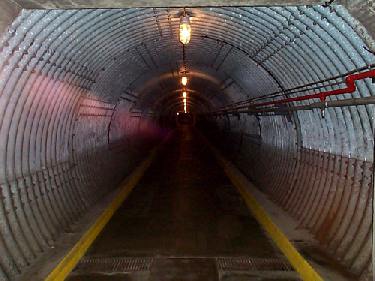
Originally called The Central Emergency Government Headquarters, the underground fortress lies just outside Ottawa in the small Ontario town of Carp. The complex quickly lost its formal name and became the “Diefenbunker,” an irreverent moniker given because it was constructed during the Diefenbaker administration in the late 1950s and early ’60s.
A half-hour drive west of downtown Ottawa, this underground lair was the ultimate in nuclear survival. Once the most secret facility in the country, its solid lead doors are now fully open to visitors wanting to discover a fascinating piece of Canada’s Cold War legacy.
…With room for a maximum of 600, its cramped bunks were reserved only for Canada’s top movers and shakers among the government and military elite.
It now receives thousands of visitors each year at $14 a head. Perhaps it would be a good place for Canadian 2012ers to visit on Dec 21, just in case?


