

Dark Comets »

Another Expert Agrees With Dark Comet Theory

February 21, 2013 – 11:31 am | No Comment

Astronomer David Asher (from Armagh University) has agreed with Bill Napier and Janaki Wickramasinghe (Cardiff University) that “dark comets” are real and dangerous.
The following quotes are from a paper by Napier and Asher published in Astronomy & Geophysics.
http://star.arm.ac.uk/preprints/2009/539.pdf

We know that about one bright comet (of absolute magnitude as bright as 7, comparable to Halley’s Comet) arrives in the visibility zone (perihelion q<5AU, say) each year from the Oort cloud. It seems to be securely established that ~1–2% of these are captured into Halleytype (HT) orbits. The dynamical lifetime of a body in such an orbit can be estimated, from which the expected number of HT comets is perhaps ~3000. The actual number of active HT comets is ~25. This discrepancy of at least two powers of 10 in the expected impact rate from comets as deduced from this theoretical argument on the one hand, and observations on the other, is …

Read the full story »
Bunkers

From DIY to Russian megabunkers

Survivalism

Preparing for when the SHTF

Pole Shift

Crustal displacements and magnetic pole shift – both are scary

Comets

Don’t believe NASA – these are a genuine threat

Earthquakes

More likely during eclipses and perhaps Comet Elenin is a factor?

Home » Megafauna

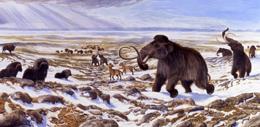
Megafaunal Extinction – Still Unsolved
Submitted by on November 27, 2011 – 4:40 pmNo Comment

Many scientists have been attempting to find an underlying cause for the demise of large mammals at the end of the last Ice Age. And they will still keep trying, because they aren’t thinking outside of the box. Today’s news has a scientist coming up with three different reasons for three species – I can’t see why this was even published…

Results of the analysis, which appear online today in Nature, “were quite surprising,” Willerslev says. “The extinctions seemed to be a random process.”

How is that a result? It basically says we don’t know. Those many species didn’t all die out at the same time due to random processes!

Conclusions from the study:

  • Humans did not cause the demise of woolly rhinos
  • Humans did not cause the demise of musk oxen
  • Humans (and climate change) did cause the demise of the steppe bison
  • “The team wasn’t able to determine the cause or causes of extinction for the woolly mammoth”

The news release ends with an admission that it is still very much a mystery (unless you believe in global cataclysms…):

After all, each of these species, including those that went extinct at the end of the last ice age, had experienced similar if not larger climate fluctuations during previous ice ages. “Why, in this case, did they go all the way to extinction?” he asks. “It’s an intellectually interesting problem.”

Leave a comment!

Add your comment below, or trackback from your own site. You can also subscribe to these comments via RSS.

Be nice. Keep it clean. Stay on topic. No spam.

You can use these tags:
<a href="" title=""> <abbr title=""> <acronym title=""> <b> <blockquote cite=""> <cite> <code> <del datetime=""> <em> <i> <q cite=""> <s> <strike> <strong>

This is a Gravatar-enabled weblog. To get your own globally-recognized-avatar, please register at Gravatar.